Part 2: Assessment and Selection
| Short answer To evaluate PCCP and bar-wrapped pipe correctly, start by identifying which pipe type is in the ground or under consideration. The two look similar but use different reinforcement, so each requires its own condition-assessment approach for existing pipelines and its own design considerations for new projects. |
In Part 1: What Is the Difference Between PCCP and Bar-Wrapped Pipe? (read here) – we compared how prestressed concrete cylinder pipe (PCCP) and bar-wrapped concrete cylinder pipe (BWP) are built. This article looks at what those differences mean when engineers and utility owners evaluate PCCP and bar-wrapped pipe on existing pipelines and select pipe for new projects.
How Has PCCP Evolved Since the 1970s?
Field experience with some PCCP manufactured in earlier decades, including prestressing-wire performance associated with hydrogen embrittlement, informed a series of revisions to the AWWA standards. These revisions strengthened requirements for material specifications, manufacturing processes, testing, inspection, and quality control.
Modern PCCP is manufactured under substantially more rigorous AWWA requirements than pipe produced in the 1970s.
For a detailed discussion of these developments, see our previous article: Improvements in the AWWA C301 Standard Since the 1970s.
Why Correct Pipe Identification Matters
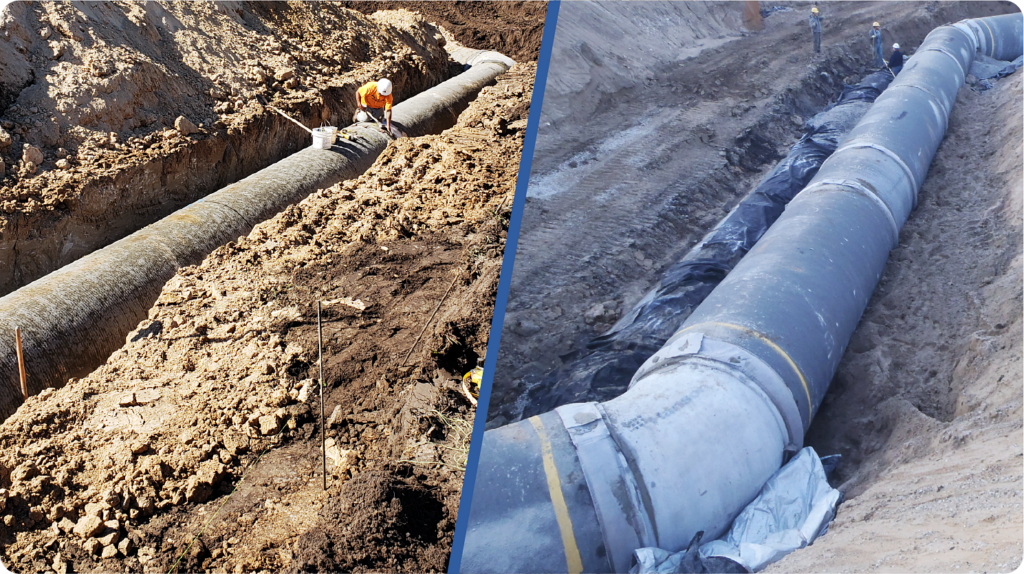
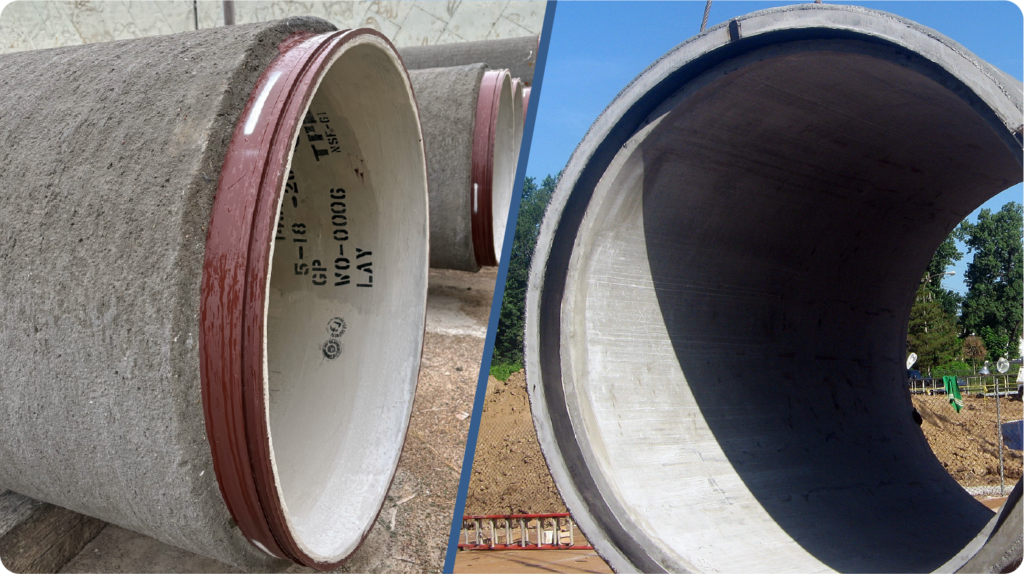
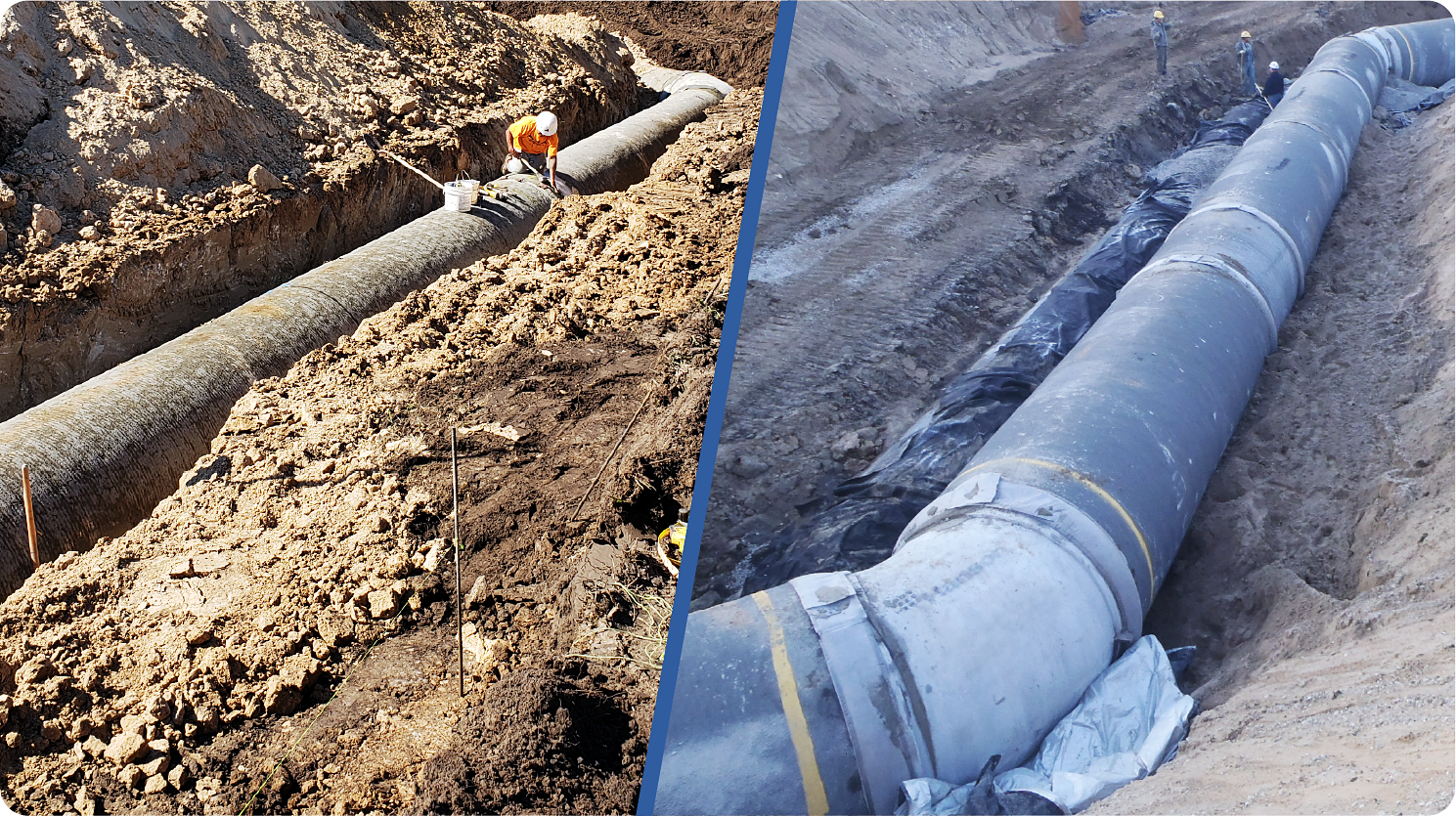
Both PCCP and bar-wrapped pipe incorporate steel and cementitious materials, and both may have an exterior mortar coating. As a result, they can appear similar during installation or when examining an existing pipeline.
However, differences in reinforcement materials, prestressing, and structural design are important when evaluating pipe performance and potential deterioration mechanisms.
For example, condition assessment methods developed for PCCP prestressing wire need to be adapted to account for the different reinforcement system in bar-wrapped pipe.
Similarly, the absence of high-strength prestressing wire in bar-wrapped pipe does not eliminate the need to evaluate other potential deterioration mechanisms, including corrosion of steel components.
Correctly identifying the pipe type is therefore an essential first step in selecting appropriate inspection, assessment, rehabilitation, or replacement strategies.
Choosing the Right Pipe for Your Project
Both PCCP and bar-wrapped pipe are established pressure pipe technologies with decades of successful applications in municipal and industrial infrastructure.
They are used in water transmission and distribution systems, power generation and cooling water facilities, water and wastewater treatment plants, and other engineered pressure pipeline applications.
Selecting between them requires consideration of project-specific factors, including:
- Pipe diameter and hydraulic requirements
- Working and transient pressures
- External loads, burial depth, and soil conditions
- Corrosion exposure and environmental conditions
- Installation methods and constructability
- Joint configurations and special fittings
- Lifecycle performance and project economics
Neither product should be selected or rejected solely based on its appearance or assumptions associated with a different pipe technology.
Two Proven Technologies. One Engineering Resource.
At Thompson Pipe Group, we manufacture both prestressed concrete cylinder pipe and bar-wrapped concrete cylinder pipe, allowing us to support projects with different structural, hydraulic, and installation requirements.
Our engineering team works with utility owners, consultants, and contractors to evaluate pipe material options, understand project-specific challenges, and identify technically appropriate solutions.
Evaluating a new pipeline or assessing an existing concrete pressure pipe system?
Explore our resources page or contact our engineering services team to discuss the differences between PCCP and BWP and determine which solution best fits your project.
With seven locations and specialist plants, Thompson Pipe Group manufactures precast, pressure, fiberglass, polymer and trenchless pipe products and supplies projects across the U.S. and Canada.
Related Reading:
How Has PCCP Evolved Since the 1970s?
Resources – Thompson Pipe Group
Prestressed Concrete Cylinder Pipe (AWWA C301)
Bar-Wrapped Concrete Cylinder Pipe (AWWA C303)
References
American Concrete Pressure Pipe Association (ACPPA) What Is Concrete Pressure Pipe (CPP) | ACPPA
American Water Works Association. AWWA C301-14(R19): Prestressed Concrete Pressure Pipe, Steel-Cylinder Type
American Water Works Association. AWWA C303-24: Concrete Pressure Pipe, Bar-Wrapped Steel-Cylinder Type
American Water Works Association. AWWA C304-14: Design of Prestressed Concrete Cylinder Pipe
American Water Works Association. Manual of Water Supply Practices M9: Concrete Pressure Pipe, Third Edition.
The Water Research Foundation. Managing Prestressed Concrete Cylinder Pipe (PCCP) to Extend Asset Life | The Water Research Foundation
ASCE. Independent Comparison of Electromagnetic Inspection Tools for AWWA C303 Bar-Wrapped Pipe by Blind Verification Testing | Proceedings | Vol , No