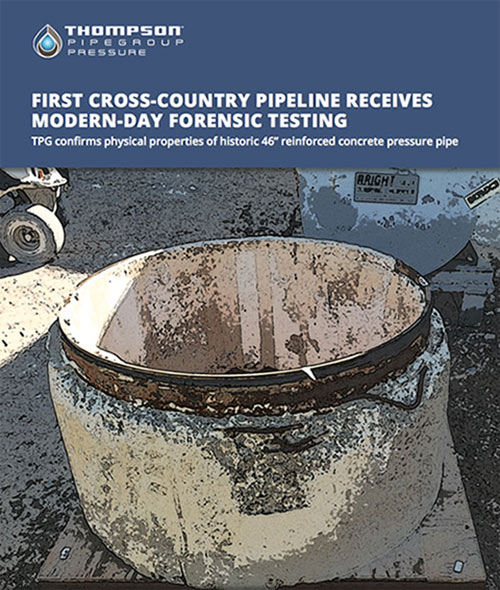
In the mid-1930s city engineers in Grand Rapids, Michigan, determined Lake Michigan water would be easier to transport and treat than their current source, the Grand River. Engineering consultants proposed welded steel or cast iron pipe for the 31-mile, 46-inch- diameter pressure pipeline. However, the city allowed Price Brothers Company, a Thompson Pipe Group legacy company, to bid reinforced concrete pressure pipe. Engineers saw the inherent benefits of the corrosion resistant pipe and affordability, and awarded the project to Price Brothers. In 1939 installation began and was complete one year later.
Testing
In 2020, 80 years after the pipeline installation, city engineers were curious about the physical properties of the pipe and how they translated to the design. The Thompson Pipe Group quality team tested a section of the pipe and reviewed:
- Inside pipe diameter and core thickness
- Concrete circumferential bar diameters
- Cylinder thickness, diameter, and tensile strength
- Tensile strength of outer cage
- Weld seam
Based on the test results and long-lasting qualities of concrete pressure pipe, staff determined the pipe is suitable for continued service.
Through proven methodologies and testing, the engineering and quality teams help owners determine the condition of their pipe and if a pipeline can handle increased pressure or additional modifications.
Additionally, Thompson Pipe Group owns historical records for approximately 80 percent of the large diameter concrete pressure pipe in the country. Records, images and lay schedules are available upon request.