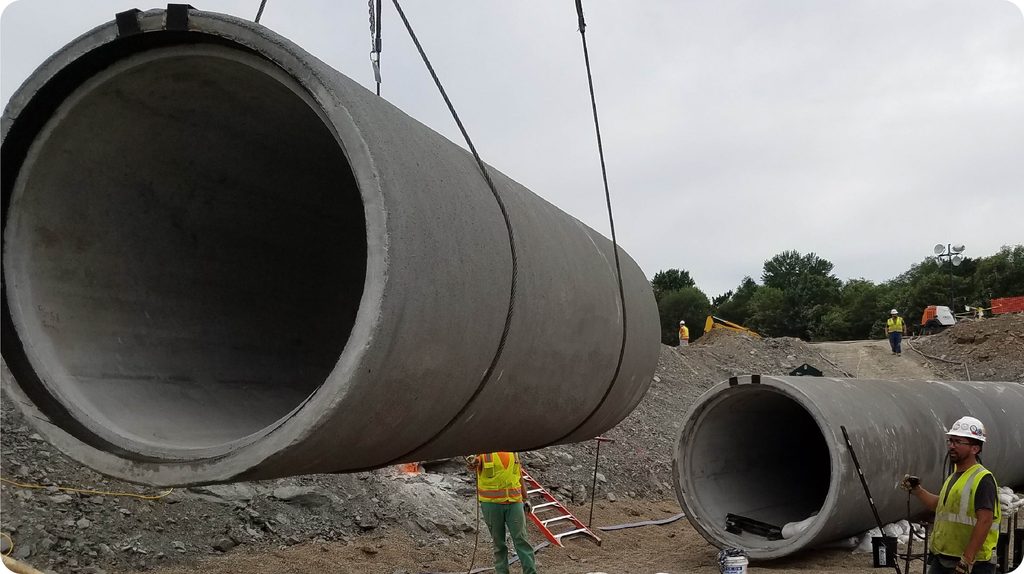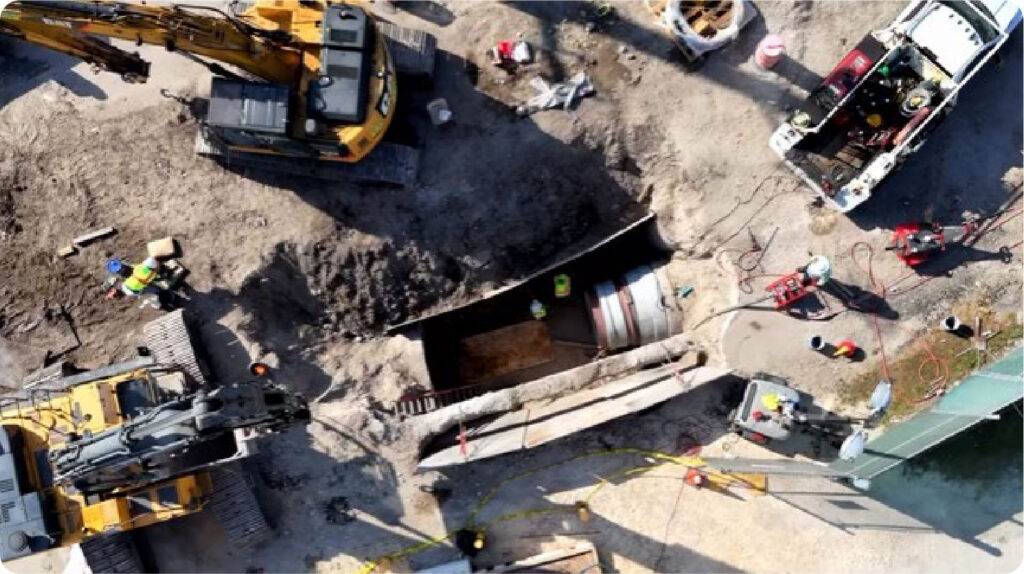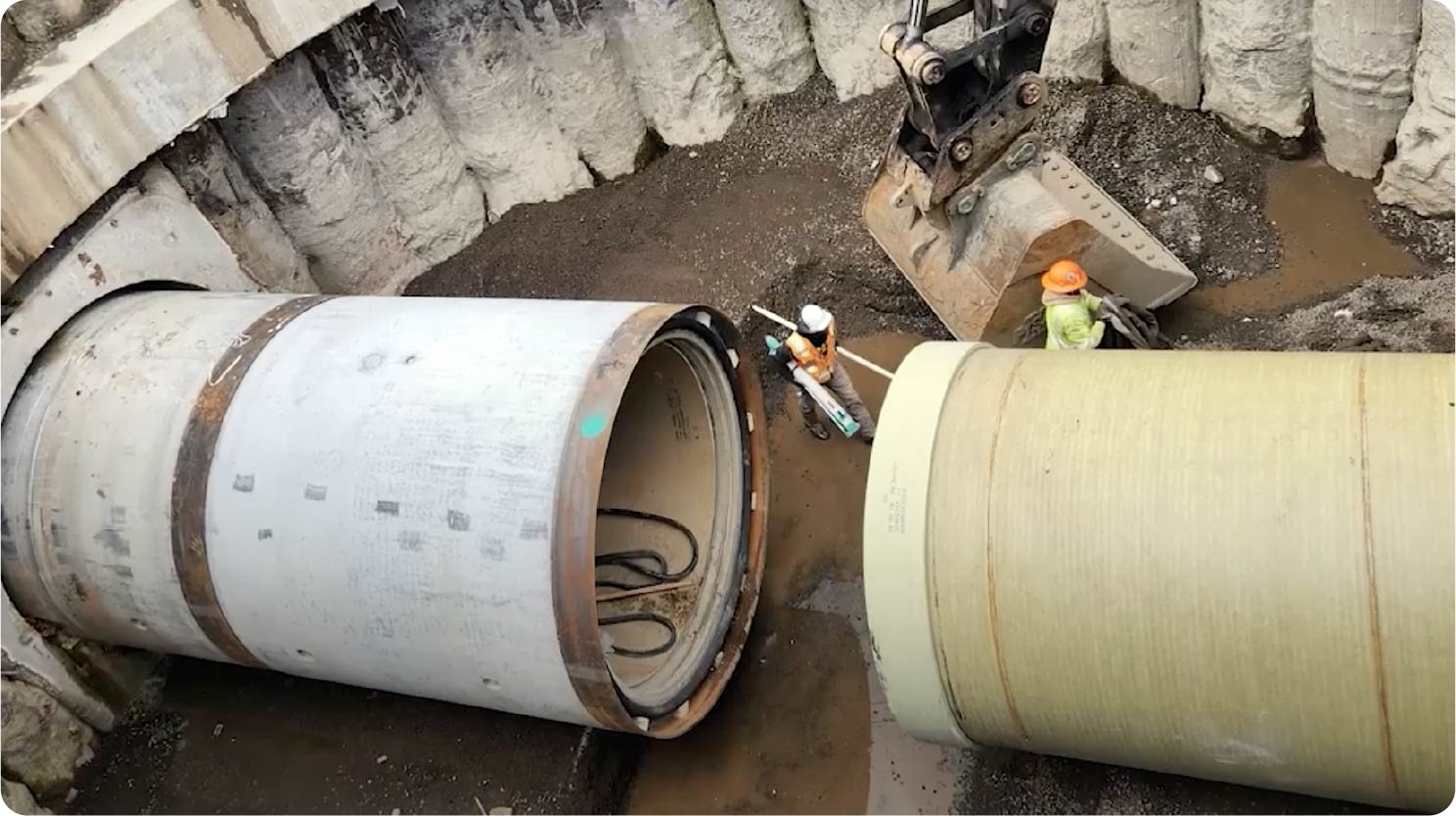
The Tri-City Water Resource Recovery Facility Outfall Project in Oregon City, Clackamas County, ranks among the most innovative microtunneling projects completed in the United States. Built for Clackamas Water Environment Services (WES) between 2024 and 2025, the project paired Thompson Pipe Group’s Flow-Crete™, FRP-lined concrete jacking pipe with a single-pass, multi-curve microtunnel drive.
The Tri-City facility treats more than 10 million gallons of wastewater daily. Its original outfall, built in 1984, was nearing capacity during peak wet weather. Facing capacity limitations and regulatory requirements, WES partnered with Michels Construction, AECOM, Jacobs, and Thompson Pipe Group (TPG) to design and install a new 90-inch outfall through a constrained urban corridor – passing beneath Interstate 205, the OR 99E off-ramp, and Jon Storm Park before discharging into the Willamette River north of the Abernethy Bridge.
Ultimately, the project’s significance marks the first-ever use of a large-diameter Flow-Crete™, system in a single-pass, multi-curve microtunnel drive in the U.S. Specifically, the 2,370-foot installation, completed with four curves and five intermediate jacking stations in one continuous drive, is a milestone for trenchless construction and demonstrates TPG’s leadership in advancing products for technically demanding trenchless applications.
The outfall is now fully commissioned.
Key Partners
– Owner: Clackamas Water Environment Services (WES)
– Owner’s Representative: Jacobs
– Engineering Firm: AECOM Technology Corp.
– Contractor: Michels Construction
– Pipe Supplier: Thompson Pipe Group; Flow-Crete™ and TPG FRP
Want the full engineering breakdown – curve radii, MTBM specs, jacking stations, pipe standards, and why the design shifted from a two-pass to a single-pass drive? Read the complete case study below.
Learn More:
Tri‑City: A Breakthrough in U.S. Microtunneling Engineering
Full Case Study
Collaborative Solutions for Complex Infrastructure: Trenchless Delivery of the Tri-City WRRF Outfall